
How to Increase Sales: Real Strategies for Service Business Owners
Dec 09, 2025
Shaquille O'Neal owns 150+ car washes and makes more money washing cars than most tech startups make with fancy apps. Let that sink in.
While everyone's chasing the next big thing, Shaq's out here building a $400 million empire with one of the most "boring" businesses imaginable.
Why?
Because he figured out something most entrepreneurs miss: sales isn't about having the sexiest product or the slickest pitch. It's about connecting what you're selling to people who need it.
If you're running a service business, cleaning, pressure washing, pest control, lawn care, and your sales are flatlining, this article is for you. No corporate buzzwords. No expensive CRM systems you don't need yet. Just practical advice that works when you're still doing the work yourself.
Why Your Sales Are Struggling (And It's Probably Not What You Think)
Most business owners blame the wrong things when sales tank. They think they need:
- Better marketing materials
- A perfect website
- More money for advertising
- Fancier business cards
Here's the truth: You're probably just not talking to enough people.
Sales expert Eric Piper, who's spent 20 years in door-to-door and residential sales, puts it bluntly: "Sales is just connecting the product to the person. That's it. People overcomplicate this."
Before you spend another dollar on marketing tools or fancy automation software, ask yourself three questions.
First, is the product you're selling actually worth selling? If you don't believe your service helps people, you're going to suck at selling it. Period.
Second, are the people you're working with worth working with? If your customers are nightmares who never pay on time, no amount of sales tactics will make your business enjoyable or profitable.
Third, is the carrot big enough? Can you actually make decent money doing this? If you're grinding 80 hours a week for poverty wages, you need a different business.
If you can't answer "yes" to all three, fix those problems first. Everything else is just noise.
The Hunter vs. Farmer Mentality, And Why You Need to Be a Hunter
There are two types of salespeople:
- Farmers sit around waiting for leads to come to them. They need a steady stream of inbound inquiries or they starve. Shut off that lead funnel, and they're done.
- Hunters don't care. They go find their next customer. Their attitude is: "You took away my territory? Cool, I'll go find another one."
If you're running a service business, especially in the early days, you need to be a hunter. That means knocking on doors in your target neighborhoods, calling businesses directly, showing up at networking events, and asking every happy customer for referrals.
Is it sexy? No. Does it work? Absolutely.
One of Piper's sales reps came prepared to live in his car for a week, brought beef jerky and a bottle to piss in (seriously), and knocked doors from sunup to sundown. He made $14,000 that week. Most people won't do that level of work, which is exactly why there's opportunity for those who will.
Stop Trying to Be Someone Else
Here's where most sales training goes wrong: It tries to turn you into someone you're not.
You watch videos of charismatic salespeople with perfect pitches and think, "I need to be like that." So you copy their energy, their words, their whole vibe. And customers see right through it because it's fake.
Piper had a breakthrough moment with an engineer on his team—a guy with the driest, most robotic delivery imaginable. Instead of trying to make him sound excited and energetic, Piper told him: "Lead with the fact that you're an engineer. Tell people you know the technical stuff better than anyone. Then just ask questions like a robot."
That guy sold 47 accounts that week.
The lesson: Find your own voice. If you're naturally analytical, lean into that. If you're funny, use humor. If you're straightforward and no-nonsense, own it. Authenticity beats a polished pitch every time.
Tactical Empathy: The One Sales Skill That Actually Matters
If you're going to master one thing, make it this: tactical empathy.
This comes from Chris Voss, an FBI hostage negotiator who wrote "Never Split the Difference." The concept is simple but powerful: genuinely listen to what people say, then repeat it back to them.
Customer says: "I'm not interested."
You say: "You're not interested."
Customer: "Yeah, we're good with what we've got."
You: "You're good with what you've got."
Sounds dumb, right? But here's what happens: People drop their defenses. They start actually talking to you instead of just trying to get rid of you.
The key is you have to be genuine. You're not manipulating them—you're actually trying to understand their situation. Once you understand the real reason they're saying no, you can figure out if your service actually solves their problem.
Most "no's" are just smoke screens. They're not really saying "I don't want this service." They're saying they don't trust you yet, they're busy right now, they don't understand why they need this, or they got burned by someone else before. Tactical empathy helps you figure out which one it is.
The Brutal Reality of Rejection (And How to Not Give a Shit)
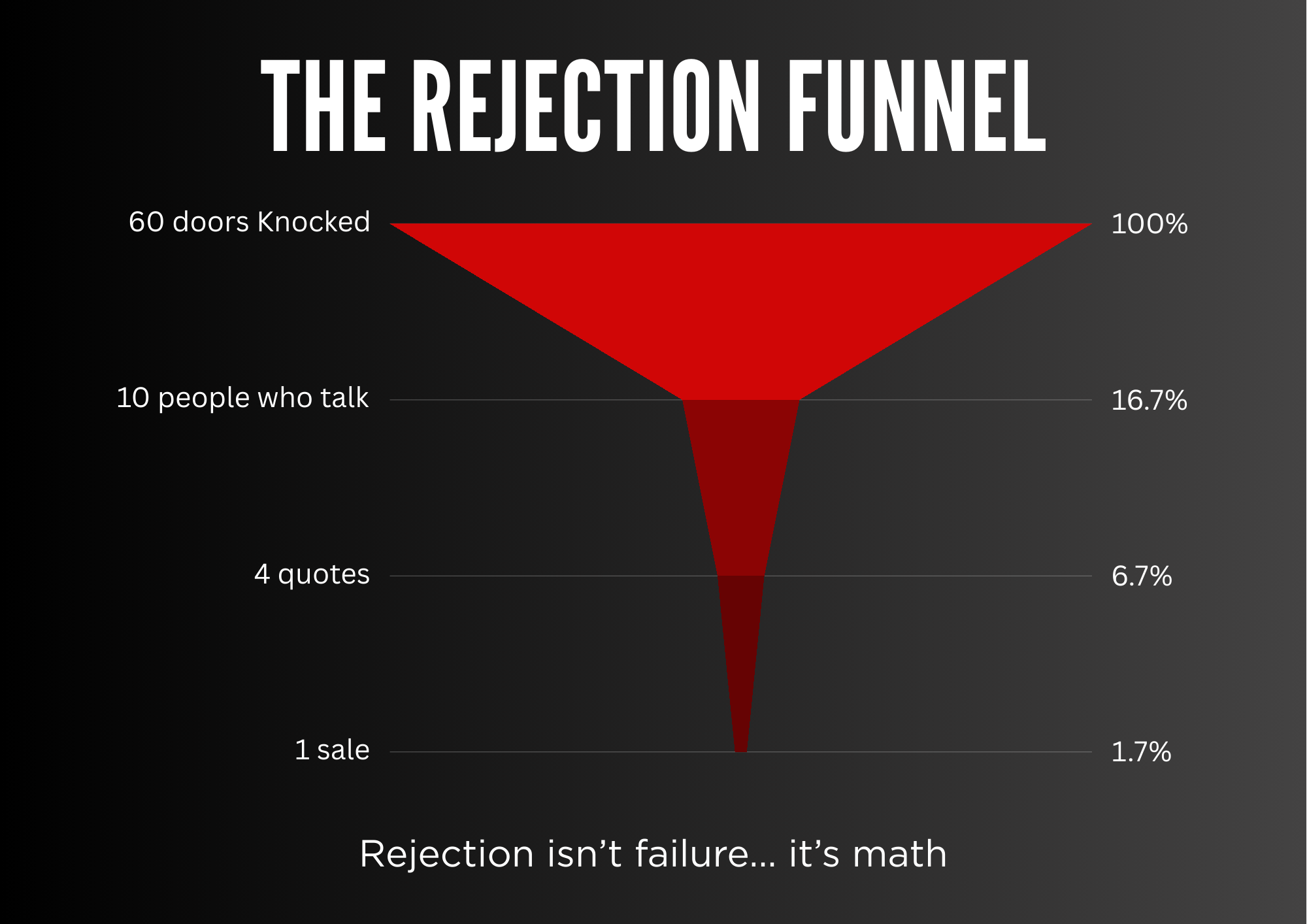
Let's talk about what nobody wants to admit: Most people will say no to you.
If you knock on 60 doors, you might get one person who hears your full pitch. That's normal. That's not a failure—it's statistics.
Piper's philosophy: "Don't take it personally. It was never about you. It's just a mismatch. You're not into brunettes? Me neither. Cool, see you later."
The problem is most people quit before they get good at handling rejection. They knock on 20 doors, hear 18 no's, and think, "This isn't working."
Here's a better way to think about it: You're not trying to convince everyone. You're trying to find the people who already need what you're selling.
Your job is to qualify people fast and move on. Not interested? No problem, next door. Can't afford it? Cool, have a nice day. Already have a provider they love? Great, here's my card in case that changes.
The faster you can disqualify bad fits, the faster you find good ones.
How to Actually Increase Sales: Strategies That Work for Service Businesses
Now let's get tactical. Here are the strategies that actually move the needle when you're running a service business.
1. Know Your Numbers (Or You're Just Guessing)
You need to know how many doors you need to knock to get one conversation, how many conversations turn into quotes, how many quotes turn into sales, and what your average sale is worth.
Let's say you knock on 50 doors to get 5 conversations, which turn into 2 quotes, which become 1 sale worth $300.
That means every door you knock is worth $6 in expected value. Once you know that, you can make better decisions about where to spend your time.
Can't track all that yet? Start simpler. How many people did you talk to today? How many said yes? How much money did you make? Write it down every single day. Patterns will emerge.
2. Target the Right Neighborhoods
Not all areas are equal. Some neighborhoods will have higher demand for your service, people who can actually afford it, and homes that need regular maintenance.
Do 30 minutes of research before you start knocking. Look for well-maintained homes (they care about upkeep), middle to upper-middle-class areas (they can pay), and neighborhoods with lots of the problem you solve, like dirty driveways, overgrown lawns, or old windows.
Spend 30 minutes on this research. It costs nothing. The payoff is conversion rates that are 2-3 times better than randomly picking streets.
3. Nail Your Opening 10 Seconds
You have about 10 seconds before someone decides whether to listen or shut the door.
Bad opening: "Hi, I'm with XYZ Cleaning and we're in the neighborhood today offering a special promotion on our premium deep cleaning services..."
Better opening: "Hey, I'm Aaron. I run a cleaning company here in West Jordan. I noticed your driveway could use some attention—I can take care of that today if you're interested."
The difference? You're a person with a name, not a company robot. You're direct about what you do. You've identified a specific problem they can see. And you're offering to solve it right now.
If they're not interested, that's fine. But you gave them a reason to pay attention.
4. Record Yourself (Yes, Really)
This is uncomfortable but it works: Record your pitch and listen to it.
Better yet, if you're in a one-party consent state, record yourself with actual customers. Then listen to where things go wrong. Are you talking too much? Do you sound confident or desperate? Are you asking questions or just pitching? Do you sound like you believe in your service?
You'll notice things you can't see in the moment. Maybe you say "um" 47 times. Maybe you apologize too much. Maybe you're not actually explaining why they need your service.
Invest one hour per week doing this. It costs nothing—just use your phone. You'll improve faster than 95% of people who never do this.
5. Ask for Referrals (And Make It Easy)
After every job, if the customer is happy, ask: "Who else do you know in the neighborhood who might need this?"
Most won't give you names on the spot. That's fine. Say: "That's cool. If you think of anyone, just text me their address and I'll go knock on their door. I'll mention you sent me."
Then actually do it. When you knock on that referred door, lead with: "Hey, I'm Aaron. I just did work for your neighbor Sarah at 123 Main Street. She mentioned you might be interested in pressure washing."
Referrals have 4x higher close rates because the trust is already there.
6. Follow Up (Most People Don't)
80% of prospects say no four times before they say yes. The average salesperson gives up after two attempts.
If someone says "not right now," ask: "When should I check back?" Then actually check back.
Keep a simple spreadsheet with customer name and address, date of first contact, their objection or reason for waiting, and the follow-up date. Set a reminder. Send a text or knock again. Most of your competition won't do this, which means you'll win by default.
7. Bundle Your Services
Instead of just offering pressure washing, offer pressure washing plus window cleaning, or pressure washing plus gutter cleaning, or pressure washing plus driveway sealing. Bundles increase your average sale and give customers more value. A $200 pressure washing job becomes a $400 package deal, and they feel like they're getting more for their money.
8. Make It Stupid Easy to Pay You
Take credit cards. Take Venmo. Take Apple Pay. Take cash. Take checks if someone insists.
Don't make people jump through hoops to give you money. Every extra step in your payment process is a chance for them to change their mind or "forget" to pay.
Warning from the trenches: Never start work before getting payment unless you're 100% certain about the customer. You'll get burned. Ask anyone who's been in business more than six months—they've all got stories about customers who "forgot their wallet" and then ghosted them.
9. Look Professional (Without Going Broke)
You don't need a fancy truck wrap or expensive uniforms. But you do need a clean vehicle (doesn't have to be new), clean clothes without holes, business cards (100 cards cost $20), and basic equipment that works.
People judge you in the first three seconds. If you roll up looking like you just crawled out of a dumpster, they're not going to trust you with their home. Budget $100-300 to look legit. The payoff is people actually opening their doors instead of hiding.
10. Stop Waiting for Permission
The biggest thing holding back most service business owners isn't tactics—it's their own head.
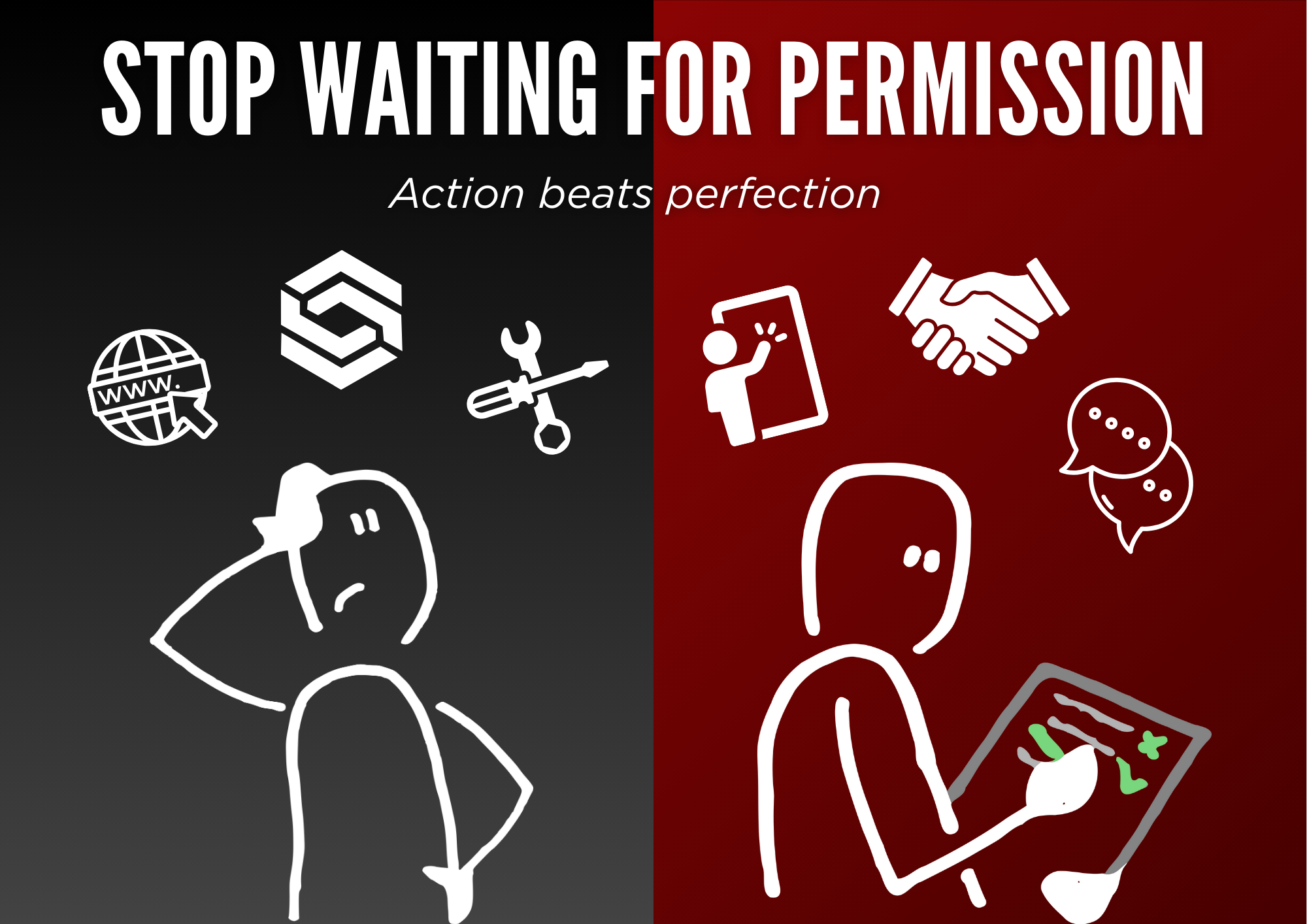
They wait for the perfect website, the perfect logo, the perfect marketing plan, the perfect everything. Meanwhile, someone with a beat-up truck and a pressure washer is out there making $500 a day knocking on doors.
You don't need anyone's permission to go knock on doors, hand out flyers, or call businesses. You just need to go do it.
What Doesn't Work (Stop Wasting Money on This Crap)
Let's talk about what most "sales experts" tell you to do that's actually garbage when you're starting out:
- Expensive CRM Systems: You don't need Salesforce when you have 10 customers. You need a Google Sheet and the discipline to actually use it. Save the $200/month CRM subscription until you're doing $20k+ per month in revenue.
- Social Media Ads (Usually): Can Facebook ads work for service businesses? Sure. But they're expensive to learn, easy to waste money on, and take time to figure out. You know what's free and works right now? Walking outside and talking to people. Master that first. Then explore paid advertising once you actually have cash flow.
- Trying to Be Everything to Everyone: "We do cleaning, and pressure washing, and lawn care, and snow removal, and..." Pick one thing. Get really good at it. Build a reputation. Then add services. Specialists make more money than generalists, especially in the beginning.
The Timeline Nobody Tells You About
Here's what you can realistically expect when you start implementing these strategies:
- Week 1-2: You'll suck. You'll be nervous. You'll get rejected a lot. This is normal.
- Week 3-4: You'll start to get comfortable with your pitch. You'll close a few sales. You'll realize this actually works.
- Month 2-3: You'll figure out which neighborhoods respond best, what objections you hear most, and how to overcome them. Your close rate will improve.
- Month 4-6: If you've been consistent (working 40+ hours a week), you should be making $3k-6k per month. Not rich, but enough to keep going.
- Month 6-12: You'll dial in your systems, maybe hire your first helper, and start thinking about how to scale. $8k-12k per month is achievable if you're working hard.
This assumes you're actually putting in the work. If you're only going out 2-3 days a week or quitting after 20 rejections, these timelines don't apply.
When to Play Defense (AKA: It's Okay to Have a Shit Job While Building)
Not everything works out on the first try. Sometimes you need to take a regular job to pay the bills while you build your business on the side.
Piper did this. He was contemplating bankruptcy after COVID killed his door-to-door business. So he took "the worst job" he ever had at a linen company. He hated it. But he became their top salesman, paid off his debts, and built his next business on nights and weekends.
There's no shame in playing defense when you need to. The key is knowing you're in defense mode temporarily, not permanently.
Keep your overhead low. Stack some cash. Learn what you can. Then get back on offense when the time is right.
The Real Secret: Network + Self-Worth = Net Worth
Your network matters more than you think. Not in a gross, fake networking way. But in a "I know people who can help me and I help them back" way.
When Piper was struggling, he spent time reading industry blogs, following people doing what he wanted to do, reaching out to ask questions, and building relationships without expecting immediate payback. That network opened doors that cold calling never would have.
But here's the thing most people miss: You also have to work on your self-worth.
If you don't believe you're the prize—that customers should feel lucky to work with you—you'll never sell confidently. You'll always be apologetic and desperate.
Confident salespeople aren't arrogant. They just know their service is valuable and they're not going to chase people who don't see it.
What to Do Right Now
If you're serious about increasing sales, here's your action plan for this week.
- Today: Pick a neighborhood to target, write down your 10-second pitch, and practice it 10 times out loud.
- Tomorrow: Knock on 30 doors (or call 30 businesses if you're B2B). Track your numbers—conversations, quotes, and sales. Write down every objection you heard.
- Rest of the week: Knock or call 30 per day, every day. Adjust your pitch based on what worked. Follow up with anyone who said "maybe" or "check back."
- End of week: Review your numbers, calculate your conversion rates, and plan next week's targets.
That's it. No fancy tools. No expensive courses. Just consistent work.
The Bottom Line
Increasing sales isn't complicated:
- Have a service worth selling
- Talk to a lot of people
- Listen to what they actually need
- Make it easy for them to say yes
- Follow up with the maybes
- Repeat every single day
The hard part isn't knowing what to do. It's actually doing it when you'd rather sit on the couch, check Instagram, or wait for the "perfect time."
Perfect time isn't coming. Your sales won't increase while you're waiting for everything to be perfect.
Shaq isn't making $400 million from car washes because he had a perfect business plan. He's making it because car washes solve a problem people have, and he built systems to deliver that solution at scale.
You can do the same thing with your service business. You just have to start knocking doors instead of reading about knocking doors.
Now go make some sales.
If you want help actually doing the work, not just thinking about it, that’s exactly what Unsexy Businessmen is built for. We’ll help you set up the systems, scripts, lead channels, and accountability you need to stop procrastinating and start growing a real, unsexy, money-making service business.
Whether you need a one-on-one consultation, a full growth package, or guided execution so you finally take consistent action, we’ve got you. Don’t wait for the perfect moment. Book a consultation, pick a package, and let’s build the business that actually pays your bills.